
If you’ve been swapping out mayo for something lighter and more nutritious, cottage cheese tuna salad is worth your attention. It’s creamy, satisfying, and genuinely fast to make — yet most people don’t know it exists. That changes today.
In this guide, you’ll learn exactly how to make cottage cheese tuna salad, why it’s nutritionally superior to the mayo-based version, and how to customize it so you’ll actually look forward to eating it.
Key Takeaways
• Cottage cheese tuna salad delivers 29g of protein per serving at just 165 calories — nearly 42% fewer calories than mayo-based versions (The Balanced Nutritionist, 2024).
• U.S. cottage cheese sales reached 746.6 million pints in 2025, up 14.3% year-over-year (NMPF/USDA/Circana, April 2026).
• The recipe comes together in under 10 minutes and keeps well in the fridge for 4 days.
What Makes Cottage Cheese Tuna Salad So Much Better Nutritionally?
In 2024, a registered-dietitian-authored analysis found that a single serving of cottage cheese tuna salad provides 29g of protein and only 165 calories, with just 4g of fat and 3g of carbs (The Balanced Nutritionist, Oct 2024). Compare that to a standard mayo-based tuna salad, which averages around 285 calories and 20g of fat for a similar portion size (NutritionValue.org / USDA, 2024).
The swap works because cottage cheese is naturally thick and creamy. Low-fat cottage cheese contains about 12g of protein per 100g (USDA FoodData Central), while canned tuna in water adds another 25g per 100g. Combined, the two ingredients make this one of the most protein-dense lunches you can throw together in ten minutes.
Worth noting: Most recipes treat cottage cheese as a “mayo substitute” — a compromise. We’d argue it’s actually the better base ingredient on its own terms.
The Ingredients You Need (And Why Each One Matters)
In 2025, “good source of protein” ranked as the #1 criterion Americans use to define a healthy food — chosen by 38% of respondents, up from 29% in 2022 (IFIC, July 2025). This recipe delivers on exactly that priority.

The base:
- 1 can (5 oz / 142g) tuna in water, drained
- 1/2 cup (115g) low-fat cottage cheese (2%)
- 1 tsp Dijon mustard
The crunch:
- 2 stalks celery, finely diced
- 2 tbsp red onion, finely diced
- 2 tbsp dill pickles or relish
The finish:
- 1 tbsp fresh dill or chives, chopped
- Juice of 1/2 lemon
- Salt and black pepper to taste
- Optional: 1/4 tsp garlic powder or smoked paprika
What we’ve found: Draining the tuna thoroughly makes a bigger difference than any other single step. Watery tuna dilutes the cottage cheese and makes the salad runny within hours.
How to Make Cottage Cheese Tuna Salad (Step by Step)
Canned tuna is the most-consumed seafood among U.S. adults: 31.9% of adults and 14.6% of youth reported eating tuna in the 2021–2023 NHANES cycle (CDC NCHS, August 2024).
Step 1: Drain and Break Up the Tuna
Open the can and drain thoroughly. Press the lid down to squeeze out as much liquid as possible. Transfer to a bowl and break into small flakes with a fork.
Step 2: Decide on Your Cottage Cheese Texture
- Curd texture — stir cottage cheese straight in for a chunkier salad.
- Smooth and creamy — blend cottage cheese with an immersion blender until smooth, then add to the tuna.

Step 3: Combine Everything
Add cottage cheese, Dijon mustard, celery, red onion, pickles, lemon juice, and herbs to the tuna. Fold together gently — don’t overmix or the tuna becomes mushy.
Step 4: Season and Taste
Add salt, pepper, and optional seasonings. Taste before serving. Add more lemon juice for brightness, or smoked paprika for depth.
Step 5: Serve or Store
Serve immediately on crackers, in a lettuce wrap, or on whole-grain bread. Press plastic wrap against the surface if storing.
Why Cottage Cheese Exploded in Popularity (And Why This Recipe Benefits)
In 2026, U.S. cottage cheese sales reached 746.6 million pints — up 14.3% from the prior year and a dramatic jump from 534.6 million pints in 2022 (NMPF, April 2026). That growth coincided with a broader shift: in 2024, 61% of Americans reported increasing their protein intake, up from 48% in 2019 (Cargill 2025 Protein Profile).
What’s underreported: tuna is high in leucine, the amino acid most directly tied to muscle protein synthesis. Cottage cheese is rich in casein, a slow-digesting protein that sustains satiety for hours. Together, they cover both the fast and slow protein absorption curves in a single meal.
How to Meal Prep Cottage Cheese Tuna Salad for the Week
Forty-six percent of U.S. adults who track protein read it on nutrition labels before buying (IFIC, July 2025). Cottage cheese tuna salad keeps well for up to 4 days in an airtight container.

- Scale up to 3–4 cans of tuna and 1.5–2 cups of cottage cheese.
- Prep all vegetables at once — dice celery, onion, and measure pickles.
- Blend all the cottage cheese in one pass with an immersion blender.
- Combine and portion into glass containers (they won’t absorb odor).
- Don’t add lemon juice until serving day — it breaks down texture overnight.
- Store herbs separately and add fresh at serving time.
Serving Ideas: Beyond the Sandwich
- Lettuce wraps — romaine or butter lettuce cups keep carbs minimal
- Stuffed avocado — healthy fats complement the protein
- Rice cakes — neutral flavor lets the tuna shine
- Whole-grain crackers — the classic, and it still works
- Cucumber rounds — thick slices for a bite-sized appetizer
- Grain bowl base — serve over quinoa or farro
- Stuffed bell peppers — colorful presentation
FAQ
Yes – Greek yogurt works as a direct substitute. Nonfat Greek yogurt provides about 10g of protein per 100g (USDA FoodData Central), which is slightly less than cottage cheese's 12g. The flavor is tangier and the texture is smoother right out of the container, so you may not need to blend it. Start with half a cup and adjust to taste.
It keeps for up to 4 days in an airtight container. The lemon juice helps preserve freshness. If the salad releases liquid by day 3, simply drain and stir before serving. Do not freeze – cottage cheese separates when thawed and the texture becomes grainy.
You can, but drain it thoroughly. Oil-packed tuna is richer and more flavorful, but adds fat that can make the salad feel heavier. The nutritional profile will shift toward higher fat and calories per serving.
At 165 calories and 29g of protein per serving, it is an exceptionally efficient meal for satiety. High-protein meals are consistently linked to reduced hunger. The leucine in tuna and casein in cottage cheese together help manage hunger for several hours.
Chunk light tuna in water is the most common and budget-friendly choice. Albacore has a milder flavor and larger flakes. For the cleanest macro profile, stick to tuna in water rather than oil.
Conclusion
Cottage cheese tuna salad is one of those rare recipes that’s genuinely better than what it replaces. More protein, fewer calories, faster to make than you’d expect, and surprisingly good. The cottage cheese boom is real — U.S. sales hit 746.6 million pints in 2025 and keep climbing — but the best reason to try it isn’t the trend. It’s that you’ll probably like it more than the mayo version once you give it a fair shot.
Make a batch this week. Start with the smooth (blended) version if you’re new to it. Add your own spin — capers work great, so does a little sriracha.
 AuthorSarah TeamDifficultyBeginner
Cottage cheese tuna salad is one of those rare recipes that’s genuinely better than what it replaces. More protein, fewer calories, faster to make than you’d expect, and surprisingly good. The cottage cheese boom is real — U.S. sales hit 746.6 million pints in 2025 and keep climbing — but the best reason to try it isn’t the trend. It’s that you’ll probably like it more than the mayo version once you give it a fair shot.
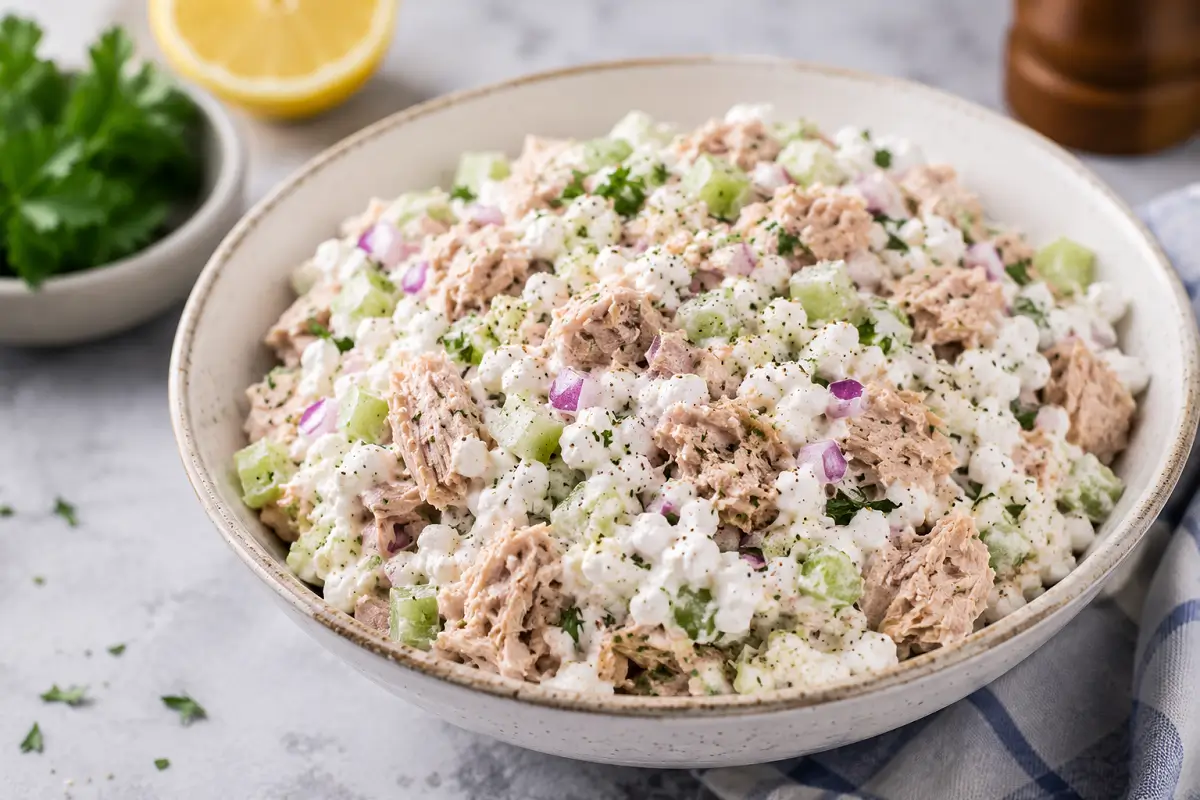

Cottage cheese in tuna salad is an interesting twist. Have you tried adding any spices for extra flavor?