
Ever sipped something so vibrant it teleported you to a hammock strung between two palm trees? That’s what a well-made tropical mocktail does. In 2026, more people than ever are ditching the cocktail and keeping every bit of the experience — the flavor, the ritual, the Instagram-worthy garnish — just without the alcohol, enjoying fresh tropical mocktails.
The good news? You don’t need a beach house, a blender the size of a surfboard, or a bartending degree. You need ripe fruit, a few pantry staples, and the right recipes. This guide gives you seven tropical mocktails that actually deliver on the promise, plus the science behind why they taste so good and why your body will thank you for them.
Key Takeaways
• In 2026, the global mocktails market is valued at $8.86 billion, growing at 5.7% annually (Business Research Insights, 2026).
• Tropical and fruity flavors drive 42.3% of all mocktail revenue and have seen 98% growth in new product introductions since 2023.
• 62% of adults now choose mocktails specifically for better health and mental clarity.
• All 7 recipes in this guide use whole-fruit ingredients with measurable nutritional benefits.
Why Are Tropical Mocktails Booming in 2026?
In 2026, the global mocktails market is valued at $8.86 billion, up from $8.38 billion in 2025, and analysts project it will double to $16.02 billion by 2035 (Business Research Insights, Mocktails Market 2026–2035, 2026). That’s not a niche trend — that’s a full-scale cultural shift.
What’s driving it? Health. Between 2022 and 2025, the percentage of Americans who drink alcohol dropped from 67% to 54% — the lowest rate ever recorded in Gallup’s polling history, with adults under 35 leading the charge with a 10-point decline in just two years (Datassential, Non-Alcoholic Beverage Trends 2026, 2026).
Tropical flavors are the biggest winners in this shift. Fruity profiles — mango, passion fruit, coconut, pineapple, guava — command 42.3% of total mocktail revenues and have seen 98% growth in new product introductions over the past three years (Accio, 2025 Non-Alcoholic Beverage Trends, 2025).
Citation capsule: In 2026, Business Research Insights values the global mocktails market at $8.86 billion — up 5.7% year-over-year — with the ready-to-drink segment growing at 10.6% CAGR. Fruity tropical flavors hold the largest revenue share at 42.3%, driven by broad cross-demographic appeal and 98% growth in new product introductions since 2023.
What Makes a Great Tropical Mocktail? (The 4-Element Formula)
In 2026, 62% of adults say they choose mocktails specifically for better health and a clearer head (Pinky Beverages, Mocktail Trends 2026, 2026). But a great mocktail isn’t just healthy — it has to taste layered and satisfying, not like juice someone put a paper umbrella in.
- A base — fresh juice or purée (mango, pineapple, guava, passion fruit)
- Acid — lime or lemon juice that lifts sweetness and prevents one-note flatness
- Carbonation — sparkling water, ginger beer, or coconut water with bubbles
- Finish — fresh herbs (mint, basil), spice (jalapeño, ginger), or salt-rimmed glass
The acid principle is especially underrated. Without lime juice, tropical mocktails taste candied — sweet, but not interesting. A tablespoon of fresh lime juice adds brightness that makes every other flavor snap into focus.
Which Tropical Mocktail Recipes Deliver Real Bliss?
1. Mango Chili Fizz
Why it works: Sweet heat is 2026’s defining flavor pairing, and mango is the perfect canvas. The jalapeño creates a warm finish that makes the mango taste sweeter by contrast.
You’ll need: 3 oz fresh mango purée, 1 oz fresh lime juice, ½ tsp agave syrup, 2 thin slices fresh jalapeño (seeds removed), 4 oz sparkling water, ice, chili-lime salt for rim, mango slice to garnish.
How to make it: Muddle jalapeño slices gently in a shaker. Add mango purée, lime juice, and agave. Shake with ice for 10 seconds. Double-strain over fresh ice in a chili-lime salted glass. Top with sparkling water.
Nutritional note: Mangoes supply 67% of your daily vitamin C per cup and are a leading source of beta-carotene (Healthline, Mango Nutrition, 2025).
2. Passion Fruit Coconut Cooler
Why it works: Passion fruit’s tartness and floral aroma paired with coconut water’s subtle sweetness is a combination that feels inherently luxurious.
You’ll need: 2 passion fruits (pulp scooped out) or 2 oz passion fruit juice, 4 oz coconut water (chilled), 1 oz fresh lime juice, ½ oz honey syrup, sparkling water to top, mint sprig and lime wheel to garnish.
How to make it: Combine passion fruit pulp, coconut water, lime juice, and honey syrup in a shaker. Shake with ice. Strain over ice in a highball glass. Top with sparkling water. Garnish with mint and lime.
Nutritional note: Coconut water provides 600mg of potassium per cup — more than a banana — making this mocktail genuinely hydrating (Texas Health, Functional Mocktails, 2026).
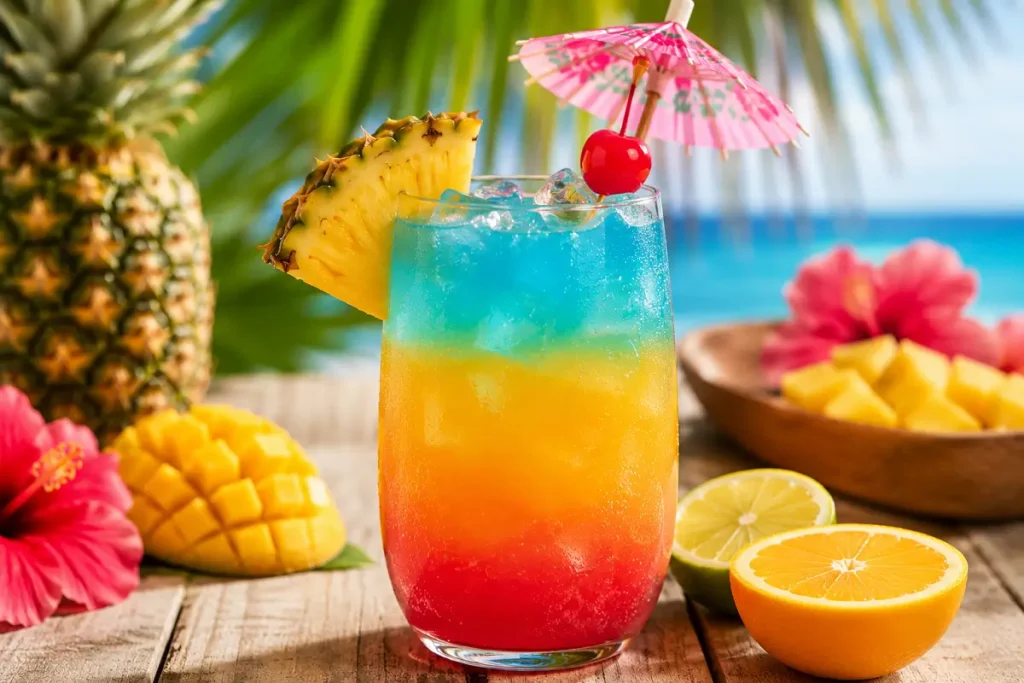
3. Pineapple Ginger Sunrise
Why it works: Ginger beer gives this one its backbone — warming, slightly spicy, undeniably alive. The pineapple contributes bromelain (a natural digestive enzyme), so this drink does actual work while tasting like a vacation.
You’ll need: 3 oz fresh pineapple juice, 1 oz fresh lime juice, 4 oz ginger beer (non-alcoholic), ½ oz grenadine, ice, pineapple wedge and cherry to garnish.
How to make it: Fill a glass with ice. Pour pineapple juice and lime juice over ice. Gently add ginger beer. Slowly pour grenadine down the side of the glass — it will sink and create the signature sunrise gradient. Don’t stir. Garnish immediately.
4. Guava Hibiscus Sparkler
Why it works: Hibiscus is the dark horse of the mocktail world — tart, floral, deep magenta, and packed with anthocyanins. Paired with guava’s musky sweetness, this is the mocktail for people who want something genuinely different.
You’ll need: 2 oz guava juice or nectar, 1 oz hibiscus tea (steeped and cooled), 1 oz fresh lime juice, ½ oz simple syrup, 4 oz sparkling water, ice, edible flowers or lime slices to garnish.
How to make it: Brew hibiscus tea (2 tablespoons dried hibiscus per 8 oz water, steep 10 minutes, cool completely). Combine guava juice, hibiscus tea, lime juice, and syrup in a shaker with ice. Shake briefly. Strain over ice, top with sparkling water.
Why hibiscus matters: A 2025 review in the Journal of Ethnopharmacology found hibiscus extract consistently lowered systolic blood pressure by 7–10 mmHg in controlled trials (PubMed/NIH, Hibiscus Cardiovascular Benefits, 2025).
5. Coconut Pineapple Colada Cooler (Virgin Piña Colada)
Why it works: The Piña Colada is the platonic ideal of tropical flavor. This version skips the rum and doesn’t miss it — the coconut cream’s richness and the pineapple’s brightness carry all the weight.
You’ll need: 3 oz fresh or canned pineapple juice, 2 oz coconut cream (not coconut milk), 1 oz fresh lime juice, ½ cup crushed ice, pineapple wedge and toasted coconut flakes to garnish.
How to make it: Blend pineapple juice, coconut cream, lime juice, and crushed ice until smooth and frothy — about 30 seconds. Pour into a chilled hurricane glass. Garnish with pineapple wedge and toasted coconut. Serve immediately.
6. Watermelon Mint Breeze
Why it works: Watermelon is 92% water — the most hydrating mocktail base you can use. The mint gives it freshness without sweetness, and a tiny pinch of Tajín on the rim transforms a simple drink into a fully layered sensory experience.
You’ll need: 4 oz fresh watermelon juice, 1 oz fresh lime juice, 6 fresh mint leaves, 3 oz sparkling water, ice, Tajín for rim, mint sprig to garnish.
How to make it: Lightly muddle mint leaves in a shaker. Add watermelon juice, lime juice, and ice. Shake briefly. Rim a glass with Tajín, fill with ice, strain the mocktail in. Top with sparkling water. Garnish with mint sprig.
7. Mango Coconut Lassi Mocktail
Why it works: This borrows from South Asian lassi tradition. The yogurt base adds probiotics and protein — making this the most functionally nutritious option on the list.
You’ll need: 2 oz fresh or frozen mango chunks, 3 oz plain whole-milk yogurt (or coconut yogurt for dairy-free), 1 oz coconut milk, 1 tsp honey, pinch of cardamom, ice, dried rose petals or mango slice to garnish.
How to make it: Blend mango, yogurt, coconut milk, honey, and cardamom with ice until completely smooth — about 45 seconds. Pour into a chilled tall glass. Garnish with rose petals or a mango fan.
Why the yogurt matters: In 2026, functional beverages with gut-health benefits are among the top three fastest-growing mocktail categories, with 58% of consumers actively seeking them (Datassential, Non-Alcoholic Beverage Trends 2026, 2026).
How Do Tropical Mocktail Ingredients Boost Your Health?
In 2025, approximately 77% of consumers say they want to do more for their health, and 86% of Gen-Z adults say mental wellness influences their beverage choices (Accio, Trends of Mocktails, 2025). Tropical mocktails don’t just align with that preference — they actively deliver.
Mango delivers 67% of daily vitamin C per cup alongside beta-carotene. Passion fruit is one of the highest-fiber fruits by weight (39% DRV per serving). Pineapple contains bromelain, a proteolytic enzyme studied for reducing inflammation. Coconut water provides 600mg of potassium per cup without the sugar load of commercial electrolyte beverages.
Citation capsule: In 2026, 62% of adults specifically choose mocktails for better health and mental clarity. Mango covers 67% of daily vitamin C, coconut water delivers 600mg potassium per cup, and passion fruit contributes 39% of daily fiber — turning a refreshing drink into a genuinely functional one (Pinky Beverages, Mocktail Trends 2026).
What Are the Best Tips for Making Perfect Tropical Mocktails at Home?
What separates a forgettable mocktail from one people ask for the recipe? Technique. Here are the five moves that make the biggest difference:
- Use fresh juice, not bottled. Fresh juice has volatile aromatic compounds that disappear within hours of extraction. Squeeze right before mixing.
- Chill your glassware. 10 minutes in the freezer prevents dilution from rapid ice melt and signals quality before the first sip.
- Salt your shaker. A tiny pinch (1/8 tsp) acts as a flavor conductor, making sweet and sour notes more vivid.
- Layer carbonation last. Pour sparkling water gently down the side of the glass to preserve bubbles and maintain color layers.
- Garnish with intent. A fresh mint sprig adds aromatic compounds that signal freshness before the drink reaches your lips.
- How to Make Enchanting Unicorn Lemonade: A 2026 Step-by-Step Guide
- How to Make Refreshing Strawberry Coconut Rum Punch: A 2026 Step-by-Step Guide
Frequently Asked Questions
What’s the difference between a mocktail and a virgin cocktail?
A virgin cocktail removes alcohol from a classic recipe. A mocktail is purpose-built for zero-proof enjoyment, with flavor layering designed from the ground up. Mocktails tend to taste more intentional and balanced.
Can you make tropical mocktails ahead of time?
Yes — with one rule: keep carbonation separate until serving. Mix your base (juice + acid + syrup) up to 24 hours in advance and refrigerate. Pre-mixed carbonated drinks lose 70–80% of their bubbles within two hours.
Are tropical mocktails high in sugar?
They can be, but don’t have to be. These recipes use whole-fruit juice with naturally occurring sugars, fiber, and vitamins. A fresh mango passion fruit mocktail has roughly 18–22g of natural sugars — comparable to a medium banana.
What’s the best base for a tropical mocktail?
Coconut water is the most versatile: mildly sweet, hydrating, and it doesn’t dominate other flavors. Fresh pineapple juice works best when you want bold tropical flavor to lead. Sparkling water is the go-to for a lighter, cleaner drink.
Which tropical mocktail is best for parties?
The Pineapple Ginger Sunrise batch-makes beautifully. Multiply ingredients and serve in a large pitcher without the grenadine. In 2026, Uber Eats reported a 40% increase in alcohol-free cocktail orders — guests at your party are more likely than ever to appreciate a great zero-proof option (Pinky Beverages, 2026).
Conclusion
Tropical mocktails aren’t a consolation prize for people avoiding alcohol. In 2026, they’re the main event — a $8.86 billion industry built on the understanding that beautiful, complex drinks don’t need a spirit to justify their existence.
The seven recipes here give you a full spectrum: creamy (Coconut Pineapple Colada), bright (Mango Chili Fizz), floral (Guava Hibiscus Sparkler), warming (Pineapple Ginger Sunrise), pure (Passion Fruit Coconut Cooler), cooling (Watermelon Mint Breeze), and nourishing (Mango Coconut Lassi). Each one works. Each one delivers.
Make one this weekend. Start with the Passion Fruit Coconut Cooler — four ingredients, five minutes, no equipment except a shaker. Then tell us which one became your regular.
Sources
- Business Research Insights, Mocktails Market 2026-2035 — retrieved 2026-06-25
- Datassential, Non-Alcoholic Beverage Trends 2026 — retrieved 2026-06-25
- Accio, 2025 Non-Alcoholic Beverage Trends — retrieved 2026-06-25
- Pinky Beverages, Mocktail Trends 2026 — retrieved 2026-06-25
- Texas Health, Functional Mocktails — retrieved 2026-06-25
- Grand View Research, Non-Alcoholic Beverages Market 2026-2033 — retrieved 2026-06-25
- Healthline, Mango Nutrition Facts and Health Benefits — retrieved 2026-06-25
- NIH/PubMed, Hibiscus sabdariffa and Cardiovascular Health — retrieved 2026-06-25